Radish
The radish is annual or biennial plant, genus Raphanus in the Brassicaceae family. Its name derives from the Latin word radix - root. Radishes are grown and consumed in many countries throughout the world. There are European, Japanese and Chinese groups of varieties distinguished by origin.
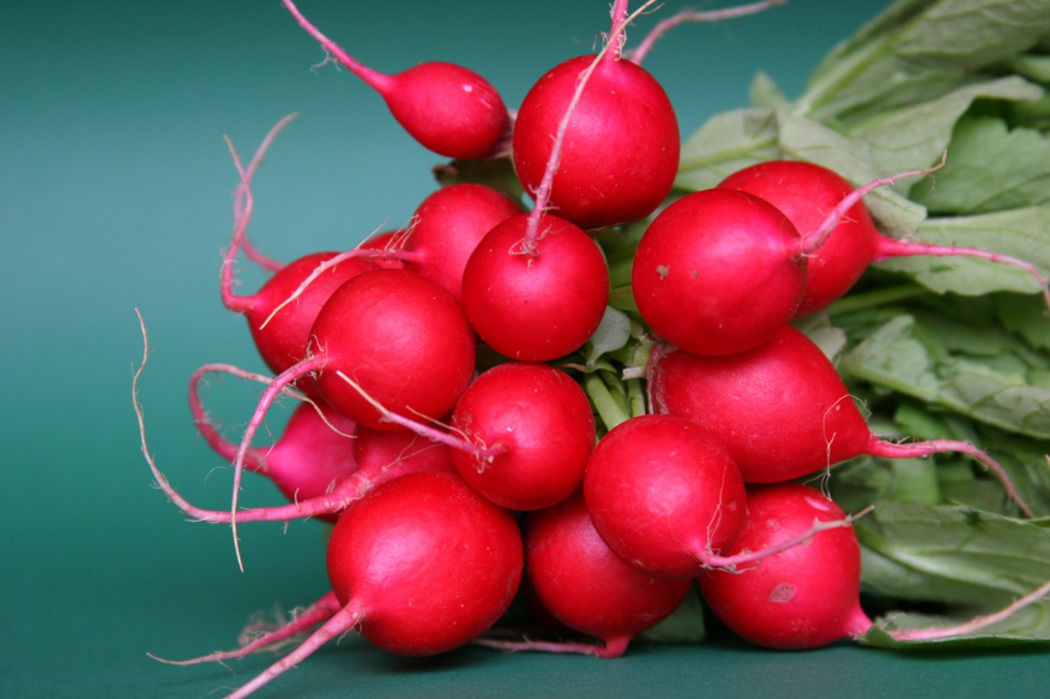
Radish tap-roots have a thickness up to 3 cm and are covered with a thin skin, which color ranges from red to pink or white and pink, and yellow and purple. The shape of the roots varies from globular to elongated. The radish roots have a pronounced spicy taste because the plants contain mustard oil.
Radish contains potassium, sodium, calcium, phosphorus, magnesium, iron, vitamins PP, C, thiamine, riboflavin and nicotinic acid. Salads made of radish produce a slight choleretic and antiedematous effect, stimulate appetite, facilitate digestion and metabolism.
The radish is on the list of the crops grown aboard the International Space Station in order to study genetic characteristics of the plants cultivated in zero gravity. The radish was chosen for its relatively short vegetation period - about 30-45 days and the possibility of further use as food.